THE SHORT ANSWER
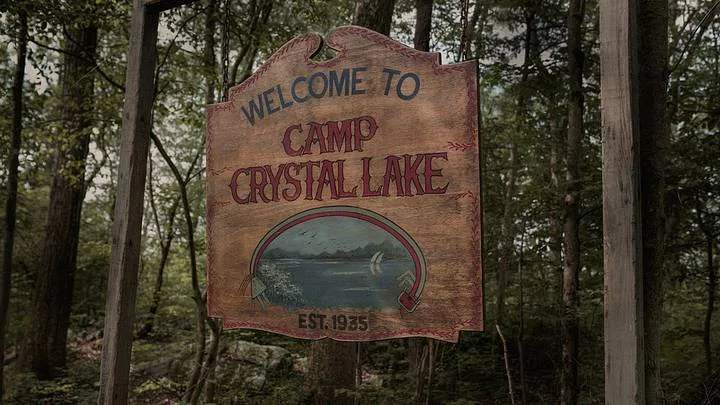
Crystal Lake uses a 1970s setting and revisits the origins of Friday the 13th. Read it as a new telling of that background, rather than forcing every date into the original films’ chronology.
Start with two different clocks.
The year a story is released is not the year in which it takes place. Crystal Lake arrived in 2026; Friday the 13th was released in 1980. Those labels identify the productions. They do not, by themselves, tell you when every scene happens.
In a pre-release interview with TV Insider, showrunner Brad Caleb Kane discussed moving the background story from the 1950s to the 1970s. That is the useful starting point for a comparison: the adaptation changes the calendar.
1950s → 1980 film
The earlier history belongs to the original movie’s account of the camp.
1970s → 2026 release
The series revisits that history with a shifted period setting.
A comparison of eras and releases, not a scene-by-scene chronology. Arrows do not indicate a fixed number of years.
How is it connected to Friday the 13th?
Peacock presents the show as a prequel. The familiar family and setting make it a natural companion to the original film, but the word “prequel” should not be treated as a promise that every detail will align.
Our reading advice: keep two columns in your notes. Put information explicitly supplied by the series in one, and information supplied by the films in the other. A familiar name is a connection; it is not evidence that all of that character’s film history has automatically carried over.
Story-premise comparison Episode 1 spoilers · open only after watching
The shared point of reference is Pam and her son Jason, and the tragedy associated with the camp. Moving that background to a different decade changes the surrounding context. It is safer to compare the role an event plays in each story than to calculate ages by combining dates from different versions.
A practical way to follow the story
- Identify the version. Is the detail from this series, the original film, a later sequel, or a fan theory?
- Separate explicit dates from estimates. A costume or song can suggest an era; a visible date or spoken year is stronger evidence.
- Keep flashbacks in their own place. The order of scenes is not always the order of events.
- Leave uncertainty visible. A gap is not an invitation to invent a missing year.
This guide does not currently assign exact calendar years to individual episodes. We would rather keep that boundary clear than publish a precise-looking chronology based on inference.
Do I need to watch the original film first?
Our recommendation is to start with the series if you want to meet this version of the characters on its own terms. Start with the 1980 film if your main interest is recognizing how the adaptation changes familiar material. Neither route requires a full franchise marathon.
Sources & editorial notes
Checked . Official links may include spoilers or be unavailable in your region. Our viewing advice is editorial judgment.